
Why Surveyors Take Time (And Why That’s Important)
Key Takeaways
- Surveying takes time due to thorough research, precise fieldwork, and detailed data processing.
- Surveyors handle historical records, boundary determinations, and legal responsibilities, which require careful analysis and review.
- Fieldwork ensures accuracy by verifying property corners and features while adhering to strict standards.
- Complex site conditions can delay surveys; rushing can lead to costly errors and disputes later.
- A well-conducted survey protects your project by ensuring all details are correct and legally defensible.
Some of the most common questions we hear is simple.
“Why does a survey take so long?” or “Why do Surveyors Take Time?”
From the outside, it can seem straightforward. A crew shows up, collects some data, and produces a drawing. But what most people do not see is everything happening behind the scenes.
Surveying is not just fieldwork. It is research, analysis, precision, and professional responsibility all working together. That process takes time, and that time is what protects your project.
Here is why.

Research Comes First
Before a crew ever steps foot on your property, the real work has already started.
Surveyors gather and review:
- Deeds
- Plats
- Historical records
- Adjacent property information
In many cases, boundary lines are not clearly defined in a single document. They must be interpreted by comparing multiple sources, some of which may be decades old.
Rushing this step increases the risk of errors before the fieldwork even begins.
Fieldwork Is Precision Work
Once on site, the field crew is not just collecting points. They are verifying evidence.

This includes:
- Locating property corners and monuments
- Measuring distances with survey grade equipment
- Identifying improvements and features
- Reconciling what exists on the ground with what is recorded
Every shot taken in the field has to meet strict accuracy standards. Conditions such as terrain, vegetation, and access can all impact how long this process takes.
Accuracy is not accidental. It is deliberate.
Data Processing and Drafting
After fieldwork is complete, the data is processed and translated into a usable format.
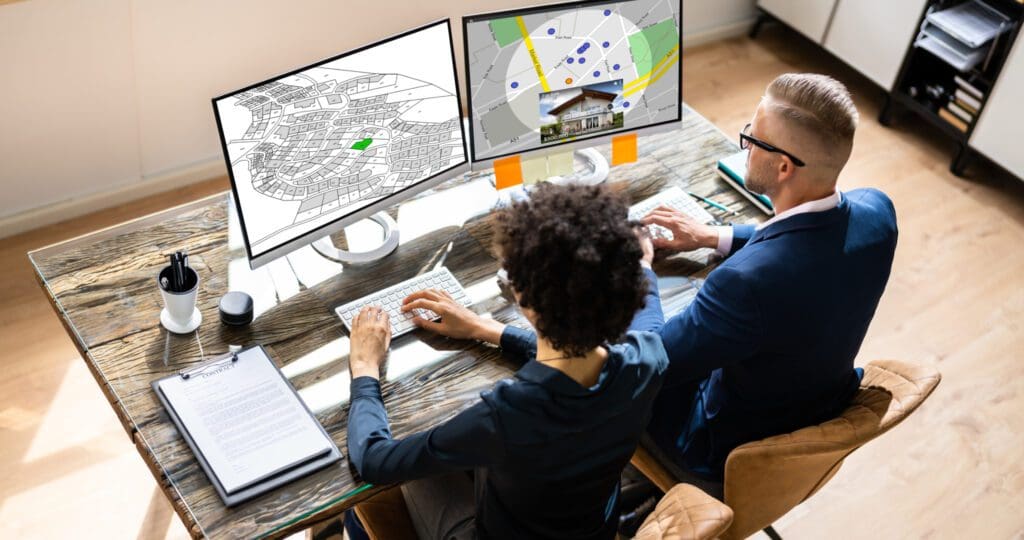
This step includes:
- Adjusting and validating field data
- Building the survey in CAD
- Cross checking measurements and geometry
- Ensuring consistency with record documents
This is where raw data becomes a clear, usable product for engineers, attorneys, and contractors.
It is also where many errors are caught and corrected before they ever reach the client.
Professional Review and Responsibility
Every survey must be reviewed and signed by a licensed Professional Land Surveyor.
This is not a formality. It is a legal responsibility.
The surveyor is accountable for:
- Boundary determinations
- Data accuracy
- Compliance with state standards
That level of responsibility requires careful review. It cannot and should not be rushed.
Coordination With Other Stakeholders
On many projects, surveying does not happen in isolation.
Surveyors often coordinate with:
- Engineers
- Developers
- Contractors
- Utility providers
Questions come up. Clarifications are needed. Adjustments are made.
Taking the time to coordinate early prevents larger issues later in the project.
Every Site Is Different
No two properties are the same.
Some sites are straightforward. Others involve:
- Complex boundary histories
- Large acreage
- Heavy vegetation
- Urban congestion or limited access
The timeline reflects the complexity of the site. A one size fits all schedule does not work in surveying.
Speed Without Accuracy Creates Risk
The biggest misconception is that faster is better.
In reality, rushing a survey can lead to:
- Incorrect boundaries
- Missed features or utilities
- Construction delays
- Legal disputes
Fixing these issues later is far more expensive and time consuming than doing it right the first time.
Final Thoughts
Surveying takes time because it is the foundation of your project.
Every line, point, and detail must be correct. That accuracy supports design, construction, and long term property ownership.
When a surveyor takes the time to do it right, they are not slowing your project down. They are protecting it.
Need a survey you can rely on
H&M Surveying delivers accurate, dependable data to support your project from start to finish.
Accuracy First, Customers Always.
A land survey takes weeks because it involves more than just fieldwork. Before a crew ever visits the site, surveyors research deeds, plats, and historical records. These documents often conflict and must be carefully analyzed to determine accurate boundaries. After fieldwork, the data is processed, drafted, and reviewed by a licensed surveyor. Each step is critical to ensure the survey is accurate and legally defensible. The timeline reflects the level of precision required, not inefficiency.
Several factors can delay a land survey, and most are tied to accuracy and site conditions. Common causes include:
Complex or unclear property records
Missing or disturbed property corners
Difficult terrain or heavy vegetation
Weather conditions such as rain or flooding
Limited access to the property
Coordination with utilities, neighbors, or other stakeholders
Delays are often necessary to ensure the survey is done correctly. Rushing through these challenges increases the risk of errors.
In some cases, a surveyor may be able to adjust scheduling to prioritize a project, but the actual work cannot be rushed without increasing risk. Surveying requires research, precise field measurements, data processing, and professional review. Skipping or compressing these steps can lead to inaccurate boundaries or missing information. A faster schedule may be possible, but accuracy and quality should never be compromised.
If your survey is taking longer than expected, it is usually due to complexity that was not fully visible at the start. This may include conflicting records, difficulty locating boundary evidence, site access issues, or weather delays. In some cases, additional fieldwork or research is needed to resolve questions that arise during the process. While delays can be frustrating, they are often a sign that the surveyor is taking the time to ensure the results are accurate and reliable.
